
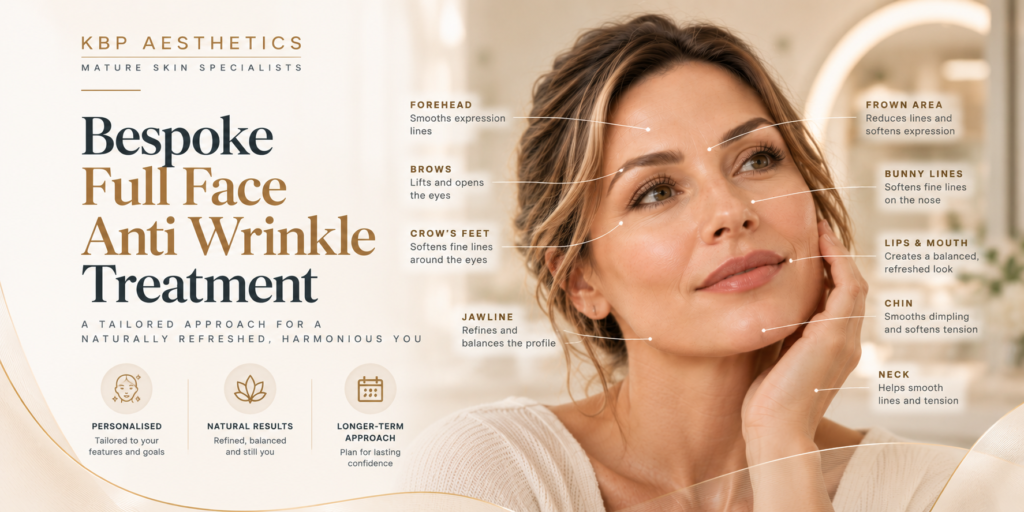
A forehead that looks smoother but leaves the brows heavy rarely feels like a good result. Nor does treating one area in isolation when the concern is really the overall face. A bespoke full face anti wrinkle treatment takes a more considered approach, looking at how different muscles, movement patterns and facial features work together so the result feels fresher, softer and still recognisably you.
For many clients, that difference matters more than simply having treatment. The goal is not to erase every line or create a fixed expression. It is to reduce the signs of tension, soften stronger movement where needed and maintain facial balance in a way that suits your features, age and long-term aesthetic plan.
What a bespoke full face anti wrinkle treatment really means
The phrase can sound straightforward, but it goes well beyond treating the classic three areas. A bespoke full face anti wrinkle treatment is tailored to the individual rather than applied as a standard package. That means your consultation should assess facial movement at rest and in expression, skin quality, muscle strength, symmetry, brow position and how one treatment area may influence another.
In practice, some clients need a very light approach. Others benefit from a more strategic plan that includes the upper face, lower face or both. The right treatment is shaped by your anatomy and your goals, not by a one-size-fits-all menu.
This is especially important if you want natural-looking results. A face does not move in separate sections. When one area is treated without considering the wider picture, it can affect how the rest of the face sits and expresses. A full-face plan reduces that risk by prioritising harmony rather than simply reducing movement.
Why treating the whole face often gives a better result
When clients say they look tired, tense or slightly older than they feel, the issue is often cumulative. Forehead lines, frown lines, crow’s feet, a downturned mouth, chin tension or neck banding can each contribute. On their own, they may seem minor. Together, they can change the overall impression of the face.
Treating the whole face does not mean every area will be injected. It means the face is assessed as one complete structure. Sometimes that leads to a minimal plan with one or two key areas. Sometimes it means a broader treatment strategy spread across appointments. The advantage is precision. Instead of chasing lines individually, the treatment supports a softer, more balanced result overall.
This approach is also useful for clients who have had anti-wrinkle treatment elsewhere and felt something was not quite right. The forehead may have looked smooth, but the eyes seemed smaller. The brows may have flattened. The smile may have felt slightly strained. These outcomes are often linked to poor planning rather than the product itself.
Common areas that may be considered
A personalised full-face plan may include the forehead, frown area, crow’s feet, bunny lines, brow lift, downturned mouth, chin, jawline, neck or masseter area. Not every client is suitable for every area, and not every area needs treatment. What matters is selecting the combination that supports your face rather than changing it for the sake of it.
Bespoke treatment is about more than units
One of the biggest misconceptions around anti-wrinkle treatment is that more product means a better result. It does not. Effective treatment depends on placement, dosage, muscle activity and the relationship between one area and another. The same number of units can look entirely different on two people.
That is why a consultation should never feel rushed. A premium treatment experience is built around careful assessment and realistic planning. If your practitioner is focused purely on speed or standard area-based pricing without considering facial dynamics, you are less likely to receive a truly tailored result.
A bespoke approach also allows for restraint. Some faces need support, not suppression. Subtle treatment can preserve expression beautifully while reducing the harsher or more ageing aspects of movement. For many clients, that balance is exactly what makes the result feel refined rather than obvious.
Who this approach suits best
Bespoke full-face anti-wrinkle treatment tends to suit clients who want polished, natural enhancement and who understand that good results are rarely accidental. It works particularly well for those starting to notice multiple areas of movement, clients interested in prevention, and those who want a longer-term facial strategy rather than occasional isolated treatments.
It can also be appropriate if you feel your features have changed with age in a way that is not down to one single concern. Perhaps your expression looks more tired than it used to, or the lower face has started to pull downward slightly. A thoughtful treatment plan can help soften those changes without making you look overdone.
That said, it is not always the right answer to every concern. Fine lines linked mainly to skin quality may respond better when anti-wrinkle treatment is combined with skin treatments. Loss of volume or contour may need a different solution altogether. The best aesthetic plans are honest about these distinctions.
The consultation should feel specific to you
A proper consultation is where bespoke treatment begins. You should expect a detailed review of your medical history, previous treatments, facial anatomy and treatment goals, along with a clear discussion of what is suitable, what is not, and what result is realistic.
Photos may be taken for assessment and progress review. Facial movement should be observed carefully rather than guessed. There should also be room to discuss the style of result you want. Some clients prefer very soft prevention. Others want more noticeable line reduction while still keeping natural expression. Neither is wrong, but the plan should reflect your preference.
At a practitioner-led clinic such as KBP Aesthetics, that one-to-one planning is central to the service. It allows treatment to be selective, measured and aligned with your face rather than a trend.
What natural-looking results actually look like
Natural-looking anti-wrinkle treatment is not about pretending nothing has been done. It is about avoiding signs that too much has been done, or that treatment has been placed without understanding the wider face.
A good result usually means the forehead appears smoother without looking stiff. The eye area looks brighter without changing your smile. The lower face looks more relaxed without appearing heavy or flat. Most importantly, your face still reflects emotion.
There is always some nuance here. A very movement-preserving treatment may leave some lines visible, particularly in stronger muscle groups. A more frozen finish may reduce lines further but look less soft. The right point on that scale depends on your preferences, your anatomy and how comfortable you are with visible movement.
Why aftercare and review appointments matter
Anti-wrinkle treatment does not end when the appointment finishes. Results develop over time, and small adjustments are sometimes needed depending on how your muscles respond. This is one reason review appointments are so valuable. They allow your practitioner to assess how the treatment has settled and whether the final result matches the original plan.
This follow-up stage is often what separates a high-touch clinic experience from a high-volume treatment model. Good aftercare supports safety, consistency and trust. It also helps build a treatment history over time, which makes future appointments even more personalised.
Clients who are new to treatment often find this especially reassuring. Knowing that the process includes review and support can make the decision feel much more comfortable.
A full-face plan works best as part of a longer-term strategy
The face changes gradually, and the best aesthetic results are usually built the same way. Rather than trying to correct everything in one appointment, a bespoke plan often works best when viewed over time. That may mean starting with anti-wrinkle treatment, then reassessing whether additional support is needed for skin quality, facial balance or volume.
This slower, more selective approach tends to produce the most elegant outcomes. It allows your treatment to evolve with your face and keeps decisions grounded in what actually suits you now, not what looked good on someone else online.
If you are considering treatment, the most worthwhile question is not how many areas can be done at once. It is whether the plan in front of you has been built around your face with enough care to look effortless when it settles. That is where confidence usually starts.