
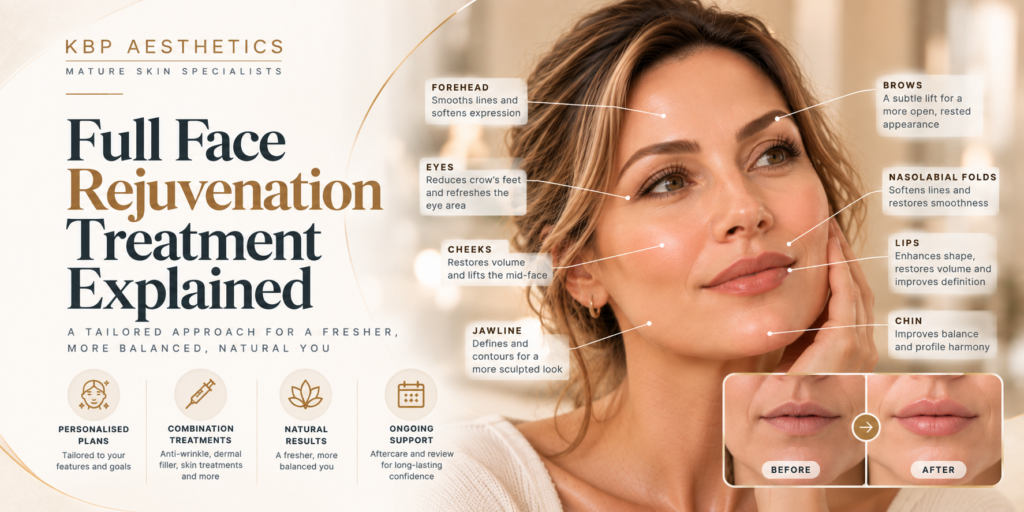
A face rarely ages in just one place. Lines may deepen, volume can shift, skin quality may dull, and features that once felt balanced can start to look tired or heavier than they used to. That is why full face rejuvenation treatment is not about chasing a single wrinkle or filling one isolated area. It is about looking at the face properly, understanding how each feature affects the next, and creating a plan that restores freshness without changing who you are.
For many clients, the difference is not dramatic in the obvious sense. It is quieter than that. You still look like yourself, but more rested, more refined, and more in proportion. That is usually the goal.
What full face rejuvenation treatment actually means
A full face rejuvenation treatment is a personalised, non-surgical approach to facial ageing and harmony. Instead of treating the forehead, cheeks, lips or jawline as separate concerns, the face is assessed as a whole. The aim is to improve overall balance while softening the signs of ageing in a controlled, natural-looking way.
This can involve anti-wrinkle injections to reduce movement lines, dermal filler to replace or support lost volume, skin treatments to improve tone and texture, and in some cases more advanced options such as Endo Laser to tighten and refine. The right combination depends entirely on the individual.
That last point matters. Two people of the same age can need very different treatment plans. One client may mainly need skin quality support and subtle line softening. Another may benefit more from mid-face structure, lower-face support and a carefully staged approach over several appointments. Good treatment planning should never look copied and pasted.
Why treating the whole face gives better results
When one area is treated in isolation, the result can sometimes feel incomplete. Softening forehead lines may help, but if the mid-face has lost support, the lower face can still appear tired. Adding volume to the lips without considering the chin, cheeks or surrounding skin can also throw proportions off rather than improve them.
A full face approach creates cohesion. Small, well-judged changes across several areas often look far more elegant than one more noticeable change in a single feature. This is particularly important for clients who want people to notice that they look well, not that they have had treatment.
There is also a practical reason for this approach. Facial ageing happens in layers. Muscle movement affects lines, volume loss affects contour, skin laxity affects definition, and changes in bone support alter how the face sits over time. Looking at the whole picture allows treatment to be smarter and more conservative.
What concerns can be improved
Full face rejuvenation treatment is often suitable for clients who feel they look more tired, drawn or less defined than they used to. Common concerns include forehead lines, frown lines, crow’s feet, under-eye hollowness, flattening through the cheeks, nasolabial folds, marionette lines, loss of jawline definition, chin imbalance, skin laxity and general loss of radiance.
It can also be appropriate for younger clients who are not dealing with advanced ageing, but want preventative support or improved facial harmony. In those cases, treatment is usually lighter. The focus may be on maintaining structure, managing early lines and keeping the face looking polished rather than trying to correct significant change.
There is always an element of judgement here. Not every concern should be treated, and not every feature benefits from more product. Sometimes the most appropriate recommendation is to leave an area alone and focus elsewhere.
How a tailored treatment plan is built
A proper consultation should look beyond the area the client first mentions. Someone may book because they dislike their nose-to-mouth lines, for example, but the real issue may be volume loss higher in the cheeks or changes in skin quality. Treating the fold alone can lead to a heavier result, whereas treating the source of the change is often more flattering.
Assessment usually considers facial shape, proportions, muscle movement, skin condition, degree of volume loss, symmetry and the client’s long-term goals. Lifestyle, budget, downtime tolerance and previous treatment history all matter too.
This is where practitioner-led care makes a difference. A tailored plan should explain what is worth treating now, what can wait, and what may require a staged approach. Premium care is not about doing everything in one appointment. It is about making careful decisions that protect both the result and the face.
The treatments often used in full face rejuvenation treatment
Anti-wrinkle treatment is often one part of the plan. It can soften expression lines in areas such as the forehead, frown and around the eyes, and it may also help refine the lower face in selected cases. The goal is not a frozen look. Done well, it simply reduces harshness and helps the face appear fresher.
Dermal filler is commonly used to restore support and shape. This may include the cheeks, chin, jawline, lips or folds around the mouth, depending on what the face needs. In a full face plan, filler should serve structure and balance first. More product does not automatically mean a better outcome.
Skin treatments can make a significant difference, particularly when texture, dullness or fine crepiness are part of the concern. Brighter, healthier skin often improves the overall result just as much as injectable treatment. In some cases, advanced tightening procedures such as Endo Laser may be recommended where laxity is contributing to heaviness or loss of definition.
The best outcomes usually come from combination treatment. That said, the balance of treatments should suit the face rather than follow a trend.
What natural-looking results really involve
Natural results are not accidental. They come from restraint, proportion and honest planning. A face that has been overfilled or treated without structure can lose movement, character and softness. Most clients looking for high-quality care are not asking to look different. They want to look polished, rested and well maintained.
That often means respecting facial identity. Your features should still belong to you. Cheek support should lift and refine, not create width. Lip treatment should suit the mouth and surrounding profile, not dominate it. Jawline work should improve definition without looking harsh or artificial.
There are trade-offs in every plan. A very subtle approach may require patience and more than one appointment. A faster, more aggressive approach can carry a higher risk of looking obvious. For most clients, a staged treatment journey gives the most sophisticated result.
What to expect from the appointment process
Treatment should begin with an in-depth consultation, not a rushed decision. Photographs may be taken for assessment and comparison. The practitioner should explain recommended options, likely outcomes, aftercare and any limitations so expectations stay realistic.
On the day, the experience should feel calm and considered. Some treatments are straightforward, while others benefit from being spaced out across review appointments. Swelling, minor bruising and short-term tenderness can happen, especially with injectable treatments, so timing matters if you have an event or work commitment coming up.
Review appointments are an important part of quality care. They allow results to settle properly, give space for fine-tuning where appropriate and support a more measured long-term plan. That level of follow-up is one reason many clients prefer a private, appointment-only clinic setting over a high-volume environment.
Who is a good candidate for this approach
Clients who usually benefit most are those who value subtle refinement, safety and a personalised plan. They are often less interested in quick fixes and more interested in a treatment strategy that keeps them looking consistently well over time.
This approach suits people who have started to notice multiple small changes rather than one single issue. It also suits those who want expert guidance on where treatment will genuinely help and where it will not.
It may be less suitable for anyone seeking a dramatic transformation in one session or choosing treatment purely on price. Full face rejuvenation treatment works best when the focus is quality, not speed.
At KBP Aesthetics, that kind of careful planning sits at the centre of treatment. The aim is always to enhance, rebalance and refresh in a way that feels polished but still entirely your own.
If your reflection looks more tired than you feel, a thoughtful full-face approach is often where the real improvement starts – not by changing your features, but by treating them with the attention they deserve.